

Leveraging Existential Dread
Meet the Death Practices I have that everyone hates lol

Today is my dad's birthday. He's 65, which is a much higher number than he looks or feels. My birthday is next week, and I'll be 29. I'm feeling some existential dread about the whole thing. Not any "I haven't done this by now," which I'm grateful for.
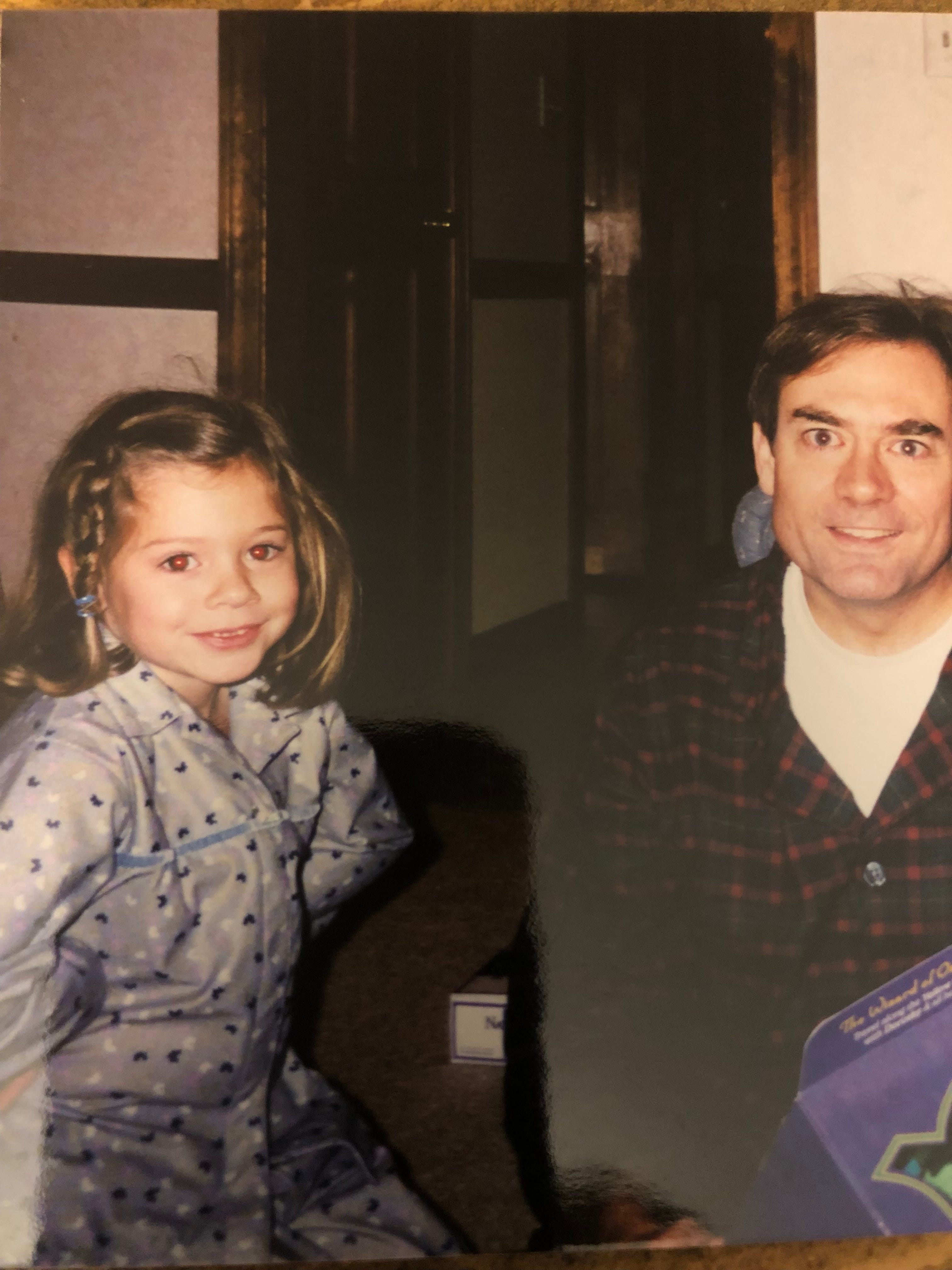
Just a more vivid reality that time does not stop, and in the end we all...end.
There's a moment for each one of us where we leave Earth. And before then, it's quite likely so many of our favorite people will go first, leaving gashes of loss in our realities.
I don't quite feel afraid. I have a wild hope in Heaven that there is more to come for us. That sharp sting of death is gone.
But lingering too long in these thoughts does make me sad. (As a human with a heart, duh). And praise God that He makes as much space for our human grief as He provides hope and joy in unequal, overflowing measure.
Anyway, this post isn't a meditation on death and grief and heaven.
It's a series of death-related rhythms I actively practice to wring the very most out of this short, fragile, precious life.
I need you to know up front that I don't think I'm fun or deep for these things, and my husband actually cannot stand when I talk about them. So far, no one I've shared my quiet, end-of-life secrets with has ever responded positively! Maybe you'll be the first. Maybe you'll unsubscribe. Who's to say!
1. The Eulogy Practice
I first practiced this in 2020, and it's become a regular meditation for me.
It's simple:
Use your imagination to cast yourself forward in time to your deathbed. Already — do not be sad. We're imagining you're at a deliciously advanced age, disease-free. You're surrounded by your most favorite people. It has all worked out.
The question is: As you, in your final moments upon earth, reflect back on your wild, beautiful life, what comes to mind?
How did you spend your days?
How did you spend your money?
Who did you spend it with?
When people speak kindly at your funeral, what do they of you?
I understand — this is an emotionally challenging space to be in. It's not something to practice on a bad day. For those of us with vibrant imaginations, you might have real tenderness and grief arise. That's okay, you're safe with yourself. I recommend setting a 10-15 minute timer to help keep yourself regulated.
What this ideally does for you is highlight in neon your soul-deep priorities and values.
You will likely find that your list of "end-of-life non-regrets" is:
Shorter than you expected.
Way less about what you accomplish
Way more about people and feelings.
I find this to be a helpful opposite of vision casting 5-10 years into the future. That practice (while also so helpful) for me tends to yield a list of things I want to do, where as this practice yields a list of how I want to live.
My first practice of this showed me some interesting stuff about who I wanted to be, things I didn't expect or have existing framework for.
I discovered I deeply desired to be known as the most generous gal in my community.
I wanted a house full of people, where community came to gather.
I wanted to be known as a woman who did what she said she would do.
And there's stuff I did expect:
I wanted to travel widely and deeply.
I wanted to have published novels, plenty of them.
I wanted Heaven to be more full because of my work and words.
This practice has given me wild freedom in how I live, but most specifically in how I work. I can be generous and creative and hospitable and a gospel-gal in plenty of different ways. It's increased my agility, decreased the pressure to perform, and is a true place I can return to as a guiding light.
2. The Countdown
Ken actually shudders when he picks up my phone and he's on this screen:

This is my death countdown widget.
Obviously, I don't know when I'll leave earth. But, I prayerfully set this timer to my 80th birthday. It's a single widget on my phone, uninterrupted by anything else, and I see it a handful of times a day.
The thing is, I don't really register that I'm seeing for 10 or so days. So I regularly have this jarring moment where I realize that the number of days is smaller than it was. That time is ticking away.
I reflect on the fact that I don't remember 75% of what happened in the last 10 days.
I feel sorrow that everyone else's clock is ticking down, too.
I vividly recall the moments I spent intentionally wasting my time, selecting dopamine dumps instead of hard work. I remember frustration at my dog, anger at my husband, apathy towards my work, skipping a walk in the woods for time on the couch, choosing not to write.
It's sobering. For just 1 minute, I am reminded that the days are evil and I am in control of very little — and I often neglect to grab full hold of what I have authority and autonomy over.
And then —
I get to confess and repent. To look at God and say, "I don't want it to be this way. Help." And, "I'm sorry. Help."
Hope returns. My end-of-life vision helps. The stuff I'm currently wrapped up in gets moved to the back burner, and the most meaningful work, the true desires of my heart rise back to the surface.
I smile.
I text my friends and family that I love them.
I close my other apps.
I hug my dog.
I praise God for the weather and go take a deep breath outside, rain or sun or hail.
These are the days. The only ones.
3. The "Bargaining" Phase
At the end of last year, we thought my beloved mother-in-law was dying. She isn't — and that's an incredible God story for another day.
But, as we're seeing, the closer death (or loss of any kind) gets, it's almost like a spotlight, putting the most important stuff into sharp relief and hiding everything else in the shadow of "distracting".
All loss, all death, it all invites us into grief. The 5 Stages of Grief, as you likely know, are:
Denial
Anger
Bargaining
Depression
Acceptance
Back to leveraging our holy imagination, I've found that casting my mind into the reality of losing important people and things (life transitions like moving or getting married are SUPER helpful here, too) and focusing on what I would, in my grief-addled stupor, bargain to keep those things helps me know how to engage with them now.
Here's an example.
I love my puppy, but he's a real high-energy challenge sometimes. In my highest frustration, I call to mind my bargain list of losing him. (God, this is so morbid, I know).
“I'll never complain about taking him on long hikes again.”
“I'll be so gentle when he's doing stuff he shouldn't do.”
“I'll spend the extra money to get him the best food.”
Immediately: I soften, because I get to choose gentleness while he's still here.
I stop panicking about the $5 extra cost on better food and treats, because in the long run, it's wildly worth it to me.
I plan a hike I know he'll love, even though my legs are tired.
There will be a day, with everything that we have and love, where we don't get to make choices about it anymore. And all we'll have are the memories of what we did do, while we had what we had.
I don't want us living under the shadow of death, obviously. But in a world that is so loud, and so full, and so unbelievably distracting, we're all actually trying to do just one thing, I think:
Live without regrets.
To get the very most out of our living moments. To be free of bitterness and exhaustion.
And knowing that you did the best with what you had? Sometimes that kind of perspective only comes from losing (or imagining the loss of ) those things.
I pray that this inspires you to get a smidge closer to the existential dread that lives in all of us. To allow the refining, revealing light of grief to shift your priorities, increase your gratitude, and open your heart and mind to being here, now.
Now go call your loved ones, yeah? You’ll never regret it.
As I sat rethinking everything I'm doing, I then read this and it was perfect addition to my day.